Frequently asked questions for Worldwide investors on AI governance and global capital markets
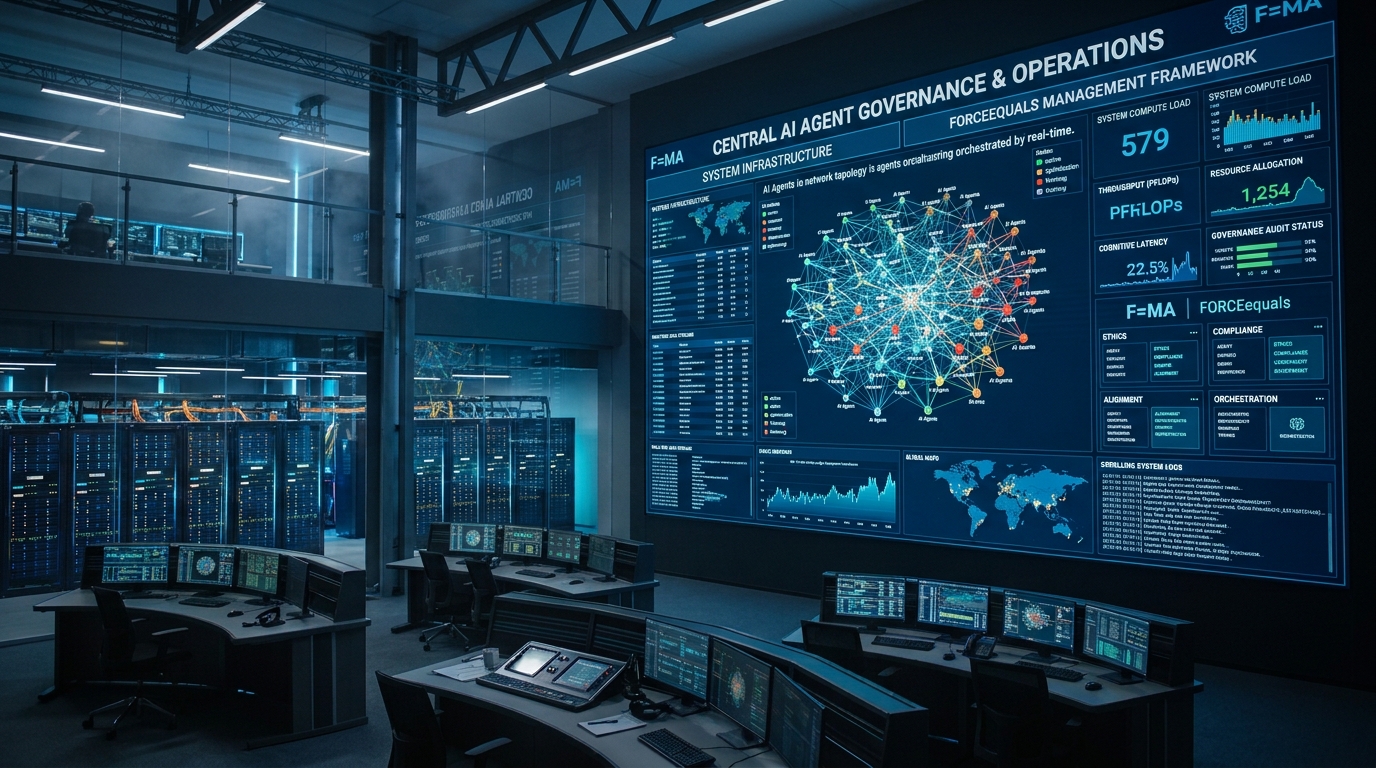
1. How does central AI agent governance protect enterprise investments for buyers from Worldwide?
Central governance gives investors and executives clear visibility and run-time controls across all AI agents, reducing policy breaches, regulatory fines, and costly agent rollbacks.
2. What happens during the two-week pre-deployment governance audit with HPC?
HPC reviews a defined set of live agents or a business unit over two weeks and delivers a clear risk mitigation plan and governance blueprint before wider scaling.
3. How does run-time policy control avoid engineering bottlenecks across multiple AI platforms?
Business and compliance teams define thresholds once centrally, and every connected agent enforces those rules automatically without waiting for developers to rewrite separate codebases.
4. How does unified escalation routing handle high-value or unusual agent actions?
When an agent triggers a threshold rule such as approving a contract above a set limit, the action pauses and routes directly to an approved human manager for review.
5. Which compliance frameworks are supported by centralised agent audit logs?
A single traceable record of agent actions and human approvals helps organisations demonstrate readiness for ISO 27001, GDPR, HIPAA, and SOC 2 requirements.
6. How do FTSE 100 gaming and leisure corporate carve-outs shape UK strategic deal flow?
Large corporate restructuring such as FTSE 100 gaming and leisure corporate carve-outs led by Entain entering advanced talks to sell its remaining 47.5% stake in its Central and Eastern European joint venture to CVC Capital Partners in a £1.5 billion to £1.75 billion deal to offset UK gambling tax rises shows how regulatory tax shifts drive disciplined asset sales.
7. How do UK wealth management buyouts and cross-border private equity co-investments influence institutional buyers?
Activity in UK wealth management buyouts and cross-border private equity co-investments following Mubadala and Centerbridge Partners' £1.17 billion joint buyout of Canaccord Genuity's UK wealth arm highlights strong international demand for scalable advisory platforms.
8. How do UK bank capital ratios, net interest margins, and European financial sector M&A outlooks affect corporate borrowers?
Discussions around UK bank capital ratios, net interest margins, and European financial sector M&A outlooks highlighted at J.P. Morgan's Financials Conference in London help borrowers anticipate credit appetite and funding costs.
9. How do distressed credit restructuring, creditor coordination, and private credit direct lending terms shape capital deployment?
Evolving practices in distressed credit restructuring, creditor coordination, and private credit direct lending terms encourage investors to structure clear covenants and maintain strong operational oversight.
10. How do UK gilt yield curve positioning and Bank of England rate-path hedging following fresh inflation data impact cross-border deals?
Shifts in UK gilt yield curve positioning and Bank of England rate-path hedging following fresh inflation data influence discount rates, debt pricing, and currency hedging costs for investors from Worldwide.
11. How do UK North Sea upstream oil and gas asset disposals and decommissioning liabilities compare with software and governance investments?
Unlike UK North Sea upstream oil and gas asset disposals and decommissioning liabilities that involve long-term physical abandonment obligations, enterprise software governance scales without heavy physical decommissioning risk.
12. How do pre-permitted grid-connected battery storage and offshore wind energy assets support industrial power needs?
Expanding pre-permitted grid-connected battery storage and offshore wind energy assets helps power energy-intensive data centres and industrial operations over the long term.
13. How do bulk annuity pension risk transfer mandates and longevity reinsurance deals affect institutional liquidity?
Bulk annuity pension risk transfer (PRT) mandates and longevity reinsurance deals move large pension liabilities onto insurer balance sheets and shape long-duration asset allocation.
14. Why are undervalued FTSE 250 public equities for sponsor-led take-private buyouts attracting private capital?
Pricing gaps among undervalued FTSE 250 public equities for sponsor-led take-private buyouts allow sponsors to take cash-generative businesses private where operational upgrades can lift value.
15. How do AI-native biotech and life sciences spinouts for institutional venture allocation benefit from stronger governance?
AI-native biotech and life sciences spinouts for institutional venture allocation including Bessemer-backed AI drug design rounds rely on traceable workflows and data integrity to support scientific validation.
16. How do secondary private equity LP stakes and GP-led continuation vehicles support longer holding horizons?
Secondary private equity LP stakes and GP-led continuation vehicles give funds and co-investors flexibility to back mature assets or extend growth runways when market exits are selective.
17. What do European IT and enterprise software portfolio rationalisations signal for software buyers?
Moves such as European IT and enterprise software portfolio rationalisations highlighted by Germany's Allgeier SE advancing the sale process for its 60% stake in Evora-Gruppe after receiving initial non-binding offers show corporates streamlining core software holdings.
18. How do European data centre infrastructure buyouts and consortium bidding reflect digital demand?
Competition in European data centre infrastructure buyouts and consortium bidding as Apollo, Ardian, Macquarie, and Rai line up to acquire Retelit's data centres underscores heavy investment in sovereign and enterprise compute capacity.
19. What drives voluntary public tender offers in European aerospace and satellite technology?
Transactions such as voluntary public tender offers in European aerospace and satellite technology following ICEYE's premium tender offer for Italian launch provider Avio reflect strategic value placed on space and defence capabilities.
20. How do AI-powered commercial due diligence tools and venture capital seed allocations support deal teams?
Adoption of AI-powered commercial due diligence tools and venture capital seed allocations following Air Street Capital and Axiom Partners co-leading LATO's $4.7 million seed round helps investors review targets faster while keeping human sign-off on key conclusions.
21. How do European winter energy storage risk and power utility hedging amid polar vortex forecasts affect European businesses?
Monitoring European winter energy storage risk and power utility hedging amid polar vortex forecasts helps European operators budget for winter electricity and heating costs.
22. How do European private equity advisory talent and Paris buyout deal pipelines assist cross-border transactions?
Expansion in European private equity advisory talent and Paris buyout deal pipelines following Milbank launching in Paris by hiring Weil, Gotshal & Manges' French team adds specialized deal execution support in continental Europe.
23. What do strategic corporate stake divestitures in European telecoms infrastructure tell investors about portfolio discipline?
Moves like strategic corporate stake divestitures in European telecoms infrastructure highlighted by Nvidia trimming its stake in Nokia show even leading tech players actively manage non-core equity stakes.
24. How do EU AI Act regulatory compliance obligations for private credit managers and institutional lenders affect governance?
Preparing for EU AI Act regulatory compliance obligations for private credit managers and institutional lenders makes transparent model logging and human oversight essential for regulated lenders.
25. How do European industrial and infrastructure initial public offering bookbuilding and Solvency II capital rules shape markets?
Activity in European industrial and infrastructure initial public offering (IPO) bookbuilding alongside Solvency II capital treatment for collateralised loan obligation (CLO) debt tranches influences institutional funding availability across Europe.
26. How do US export control compliance and compute-cap rules on Southeast Asian data centres affect AI infrastructure?
Tighter US export control compliance and compute-cap rules on Southeast Asian data centres amid new US regulatory scrutiny targeting facilities exceeding 12 million TPP compute require international operators to plan hardware sourcing and regional architecture carefully.
27. How do Asian semiconductor supply chain equity hedging and chip export restriction fallout impact tech portfolios?
Volatility tied to Asian semiconductor supply chain equity hedging and chip export restriction fallout following California probes into Nvidia's China chip sales and a $1.7 trillion sell-off in China's AI trade reinforces the need for disciplined risk controls across tech exposures.
28. What do cross-border industrial lubricant and downstream distribution network acquisitions in China show about foreign expansion?
Moves such as cross-border industrial lubricant and downstream distribution network acquisitions in China following ADNOC Distribution expanding its global distribution channels in China highlight ongoing commercial expansion in key Asian markets.
29. How do oversubscribed Indian qualified institutional placements and equity capital market bookbuilding reflect regional demand?
Strong appetite in oversubscribed Indian qualified institutional placements (QIPs) and equity capital market bookbuilding led by Urban Company's ₹2,500 crore QIP shows deep institutional participation in leading Indian growth companies.
30. How do European private equity GP fundraising roadshows targeting Singapore, Hong Kong, and Tokyo institutional LPs connect regions?
European private equity GP fundraising roadshows targeting Singapore, Hong Kong, and Tokyo institutional LPs link Asian capital pools directly with European buyout and infrastructure mandates.
31. How do Japanese government bond issuance strategy and Bank of Japan rate expectations influence global funding?
Shifts in Japanese government bond (JGB) issuance strategy and Bank of Japan rate expectations affect global interest rate paths and cross-border liquidity.
32. Why are hyperscale AI data centre land parcels and Southeast Asian power capacity critical for AI scaling?
Securing hyperscale AI data centre land parcels and Southeast Asian power capacity addresses long lead times for land, grid connections, and reliable electricity.
33. How do pre-IPO late-stage secondary blocks in Asian tech and consumer conglomerates create access for investors?
Transactions involving pre-IPO late-stage secondary blocks in Asian tech and consumer conglomerates allow qualified buyers to enter established growth businesses ahead of public listings.
34. How do tokenised wholesale bank deposits and distributed ledger capital market settlement rails modernize finance?
Pilot programmes around tokenised wholesale bank deposits and distributed ledger capital market settlement rails aim to speed up institutional clearing and treasury workflows.
35. How do foreign currency intervention thresholds and USD/JPY cross-currency basis swaps help manage currency risk?
Tracking foreign currency intervention thresholds and USD/JPY cross-currency basis swaps helps cross-border investors hedge exchange rate swings between major currencies.
36. How do state-backed North African venture and AI sovereign funds support regional innovation?
Initiatives such as state-backed North African venture and AI sovereign funds led by Morocco launching a 2.5 billion dirham ($256 million) fund to back domestic AI startups demonstrate public commitment to building local AI ecosystems.
37. What do pan-African early-stage venture fund closes and Egyptian fintech regulatory licensing signal for Africa?
Developments like pan-African early-stage venture fund closes and fintech co-investment vehicles following Africa Fintech Summit co-founder Zekarias Amsalu launching Next Roots Ventures with a $10 million debut fund and Egyptian fintech regulatory licensing and non-bank financial services expansion following Egypt's Financial Regulatory Authority clearing 10 companies to expand fintech operations show growing support for regulated financial innovation.
38. How do critical mineral exploration, East African mining project finance, and oversubscribed East African industrial rights issues shape African deals?
Activity across critical mineral and uranium exploration exclusivity deals across Southern Africa, East African mining project financing and sovereign exploration licensing, and oversubscribed East African industrial rights issues and exchange equity listings points to continued resource and industrial investment.
39. How do sovereign eurobond yield spreads, utility-scale renewable energy, telecoms towers, and DFI guarantees support African projects?
Evaluating sovereign eurobond yield spreads and local-currency treasury bill auctions alongside utility-scale renewable energy and carbon credit registration financing, pan-African telecommunications towers, fibre networks, and mobile money platforms, and Development Finance Institution (DFI) blended-finance guarantees and agricultural risk insurance helps structure resilient projects.
40. How do war-risk marine hull insurance rates and Strait of Hormuz transit rerouting logistics affect Gulf trade?
Developments in war-risk marine hull insurance rates and Strait of Hormuz transit rerouting logistics following fresh reports of tankers struck near Oman require shipping and industrial firms to maintain flexible routing and insurance cover.
41. How do outbound sovereign wealth acquisitions in UK and European wealth management connect with GCC strategy?
Outbound sovereign wealth acquisitions in UK and European wealth management led by Mubadala's $1.55 billion joint buyout of Canaccord's UK business show Gulf capital building long-term global financial footprints.
42. What do Middle East growth equity rounds and regional treasury conferences highlight for GCC investors?
Momentum in Middle East growth equity and unicorn Series A syndications highlighted by Corma securing a $125 million Series A at a $1 billion valuation alongside regional startup rounds and regional treasury liquidity management, FX risk hedging, and fixed-income market infrastructure highlighted at the 6th GCC Financial Markets and Treasury Conference in Dubai shows maturing capital markets and treasury discipline.
43. How do GCC sovereign wealth allocations into global AI compute, pre-IPO buyouts, and GCC IPO bookbuilding shape deal flow?
GCC sovereign wealth outbound allocations into global AI compute and digital infrastructure, regional private equity pre-IPO growth buyouts and mid-market consolidation, and GCC regional initial public offering (IPO) bookbuilding and foreign institutional allocations create active primary and secondary deal channels.
44. How do LNG offtake agreements, sovereign sukuk issuances, localised defence manufacturing, and master-planned urban land parcels support Gulf growth?
Long-term liquefied natural gas (LNG) offtake agreements and East-West pipeline export capacity, sovereign and quasi-sovereign sukuk issuances and syndicated project finance facilities, localised defence manufacturing and renewable energy joint ventures in Saudi Arabia, and master-planned urban development land parcels and hospitality brand management contracts anchor multi-sector development.
45. What do post-IPO institutional equity trading and AI valuation repricing after Anthropic's record $81.3 billion IPO show?
Market reaction around post-IPO institutional equity trading and AI valuation repricing as Anthropic's record $81.3 billion IPO collided with a broader Wall Street tech sell-off reminds investors to focus on sustainable fundamentals and strong controls.
46. How do US middle-market insurance brokerage consolidation and US midstream energy private equity fundraises shape real-economy deals?
Transactions such as US middle-market insurance brokerage consolidation and strategic M&A following Aon completing its acquisition of USI and US midstream energy private equity fundraises and pipeline infrastructure consolidation following EnCap Flatrock targeting $1.5 billion for its sixth midstream fund show ongoing consolidation in essential services and energy transport.
47. How do Australian residential property liquidity, corporate bond issuances, and private credit scrutiny affect Oceania investors?
Trends across Australian residential property market liquidity and auction clearance rates amid tightening listings, Australian domestic corporate senior unsecured bond issuances and bank note buybacks, and Australian regulatory scrutiny of private credit fund valuations and conflicts of interest highlight the value of clear governance and transparent pricing.
48. How do sovereign wealth 13F equity portfolio rebalancing, US aviation and defence M&A debt financing, wireless spectrum allocations, and US Treasury yield hedging shape portfolios?
Activity across sovereign wealth and public pension fund 13F equity portfolio rebalancing and Q3 valuation shifts, US aviation and defence M&A acquisition debt financing and senior note offerings, public pension fund allocations into wireless spectrum and satellite infrastructure, and US Treasury long-dated yield hedging and Federal Reserve rate-path derivatives reflects how institutional allocators manage risk and return across cycles.
49. How does HPC protect confidentiality during initial AI governance or investment discussions?
HPC uses strict non-disclosure agreements and staged information sharing so executives and investors from Worldwide can review technical and commercial details safely.
50. How can leaders and investors from Worldwide get started with HPC on AI governance or cross-border mandates?
Decision makers and investment teams from Worldwide can contact HPC directly to book a two-week pre-deployment governance audit or discuss active cross-border mandates.